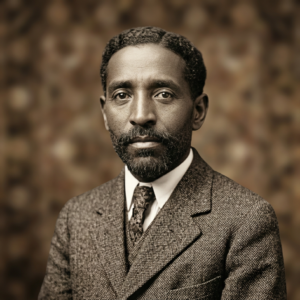
 William M. Rentie occupies a special place in Oklahoma history as the founder and namesake of Rentiesville, one of the state’s best-known surviving historic All-Black towns. Though relatively little is known about his personal life today, his contributions helped establish a community that became a symbol of African American self-determination, land ownership, and community pride.
Rentiesville was founded in 1903 in what is now McIntosh County during a remarkable period when African Americans established dozens of independent communities across Oklahoma. Following the Civil War and the opening of lands in Indian Territory, Black settlers were drawn to the region by opportunities for land ownership, economic advancement, and self-governance. Oklahoma would eventually become home to more All-Black towns than any other state in the nation.
The town was established on forty acres of land, twenty acres owned by William Rentie and twenty acres owned by Phoebe McIntosh. Rentie joined Rev. N. A. Robinson, I. J. Foster, and W. D. Robinson in organizing the townsite company that laid the foundation for the new community. W. D. Robinson served as president of the company, helping guide the town’s early development.
The founders envisioned a thriving community where African Americans could own homes and businesses, educate their children, worship freely, and build prosperous lives. Their efforts quickly began to bear fruit. A post office opened in 1904, Rentiesville became a flag stop on the Missouri, Kansas and Texas Railway, and businesses, churches, schools, and homes soon followed.
The town was named in honor of William Rentie, whose land donation helped make the community possible. Beyond lending his name to the town, Rentie served as its first and only marshal during its early years. His leadership and commitment to maintaining order earned him the respect of local residents and made him one of the community’s most important figures.
Tragically, Rentie’s life was cut short in 1908. After arresting a man for drunkenness and disorderly conduct, he became the target of retaliation. A relative of the arrested man later shot and killed Rentie, depriving the young town of one of its founders and strongest leaders. Despite this loss, the community he helped establish endured.
Over the years, Rentiesville became known for much more than its founding story. The town was home to the family of renowned historian John Hope Franklin and later gained national recognition through blues musician D.C. Minner and the annual Dusk ’til Dawn Blues Festival. Through periods of growth, decline, and renewal, Rentiesville remained a testament to the vision of its founders.
Today, the story of William Rentie is inseparable from the story of Rentiesville itself. Along with Phoebe McIntosh and the other town organizers, he helped create a lasting legacy that stands as an enduring reminder of the All-Black town movement and the determination of African Americans to build thriving communities on their own terms.