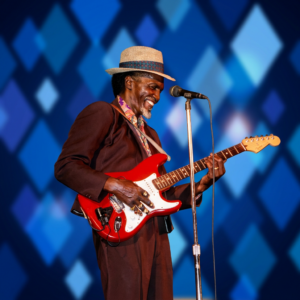
 D.C. Minner was far more than a blues guitarist. He was a performer, teacher, festival founder, cultural preservationist, and one of the most important figures in Oklahoma blues history. Through his music and tireless community work, Minner transformed the small historic town of Rentiesville, Oklahoma, into an internationally recognized center for blues culture and education.
Born on January 28, 1935, in Rentiesville, Oklahoma, D.C. Minner grew up immersed in the sounds of rural Black Oklahoma. Rentiesville was one of Oklahoma’s historic All-Black towns, communities founded by African Americans seeking economic opportunity and self-governance in the years following Reconstruction. Music was an essential part of community life, and Minner’s earliest experiences came in the juke joints and social gatherings that formed the backbone of local entertainment. His mother operated a juke joint, giving the young Minner direct exposure to the blues musicians who passed through eastern Oklahoma.
Like many blues artists of his generation, Minner learned through observation, practice, and experience rather than formal instruction. He began performing professionally during the 1950s and 1960s, initially playing bass guitar before eventually switching to lead guitar. During these years he worked with numerous regional and national artists, including O.V. Wright, Freddie King, Chuck Berry, Eddie Floyd, and Bo Diddley. These experiences exposed him to a wide variety of blues, rhythm and blues, and early rock-and-roll styles that would influence his own approach to music.
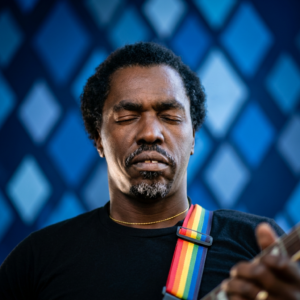 By the 1970s, Minner had established himself as a respected guitarist and bandleader. He spent time in California and performed throughout the western United States before returning to Oklahoma. His playing blended traditional blues with modern influences, featuring expressive guitar work, strong vocals, and a deep understanding of blues traditions. While he never achieved the commercial fame of some of his contemporaries, fellow musicians and blues enthusiasts recognized him as an authentic and gifted performer who remained dedicated to the roots of the music.
A major turning point in his life came with his partnership and later marriage to bassist Selby Minner in 1979. Together they formed Blues on the Move, a band that became a fixture at festivals, schools, and community events throughout Oklahoma and beyond. The Minners shared a vision that extended far beyond performing. They believed blues music was an important educational and cultural resource that should be preserved and passed on to future generations.
Their commitment to education led to one of Minner’s most significant accomplishments, Blues in the Schools. Through workshops and classroom programs, D.C. and Selby introduced thousands of students to blues history, African American culture, and the musical traditions that helped shape American music. Their efforts earned international recognition from The Blues Foundation in Memphis through a Keeping the Blues Alive Award, one of the highest honors in the blues community.
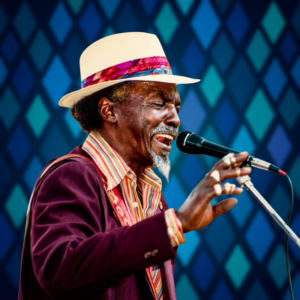 Perhaps Minner’s greatest achievement was the creation of the Dusk ’til Dawn Blues Festival in Rentiesville. Founded in 1991 by D.C. and Selby, the festival began modestly but steadily grew into one of Oklahoma’s premier blues events. Held annually during Labor Day weekend, the festival became famous for its marathon performances that continued throughout the night. What started with a handful of performers eventually attracted dozens of bands, hundreds of musicians, and thousands of visitors from across the United States. The festival helped place Rentiesville on the national blues map while celebrating both Oklahoma’s musical heritage and the legacy of its historic All-Black towns.
Central to this effort was the Down Home Blues Club, located in Minner’s childhood home in Rentiesville. Opened by D.C. and Selby in 1988, the club became a gathering place for musicians, students, historians, and blues fans. The intimate venue embodied the spirit of traditional juke joints while serving as a cultural center dedicated to preserving Oklahoma blues history. The club later became home to the Oklahoma Blues Hall of Fame and the D.C. Minner Museum, ensuring that future generations could learn about the state’s rich blues heritage.
Minner’s contributions extended beyond performance and festival promotion. He worked tirelessly to document and celebrate Oklahoma blues artists who were often overlooked by mainstream histories. His efforts helped preserve the stories of numerous musicians whose contributions might otherwise have been forgotten. Through the Oklahoma Blues Hall of Fame, he created a permanent institution dedicated to recognizing these artists and educating the public about their importance.
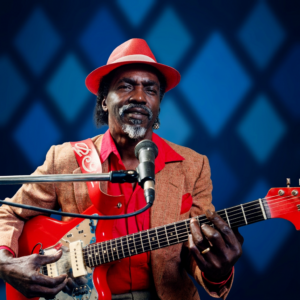 Recognition followed. Minner was inducted into the Oklahoma Jazz Hall of Fame in 1999 and later the Oklahoma Music Hall of Fame. Streets were named in his honor, and his work earned respect throughout the blues world. Yet those who knew him often spoke less about the awards and more about his generosity, enthusiasm, and commitment to helping others. Whether teaching a child to play guitar, mentoring a young musician, or welcoming visitors to Rentiesville, Minner viewed blues music as a tool for building community and preserving culture.
D.C. Minner died on May 6, 2008, but his influence remains deeply woven into Oklahoma’s cultural landscape. The Down Home Blues Club continues to operate, the Oklahoma Blues Hall of Fame preserves the state’s musical legacy, and the Dusk ’til Dawn Blues Festival remains a living tribute to the dream he and Selby built together. More than a musician, D.C. Minner became a guardian of history, ensuring that the sounds, stories, and spirit of Oklahoma blues would continue to inspire generations to come.