From Rentiesville to Harvard: The Extraordinary Life of John Hope Franklin
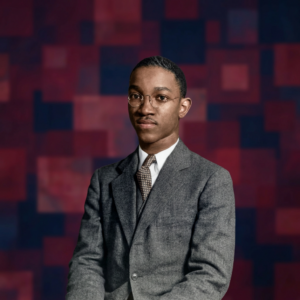 There are historians who record the past, and then there are historians who reshape how the world understands it. John Hope Franklin belongs firmly in the latter category. Born in 1915 and raised in the All-Black town of Rentiesville, Oklahoma, Franklin would go on to become one of the most influential scholars in American history. His work did more than document events, it challenged long-standing narratives, corrected distortions, and placed African American history at the center of the American story where it had always belonged.
Franklin’s early life in Rentiesville played a defining role in shaping both his worldview and his intellectual path. Rentiesville was one of Oklahoma’s historic All-Black towns, communities founded by African Americans seeking autonomy, safety, and opportunity in the post-Reconstruction era. In these towns, Black leadership, education, and self-determination were not abstract ideals, they were daily realities. Franklin grew up surrounded by educators, professionals, and community builders, including his father, Buck Colbert Franklin, a prominent attorney who would later play a key role in the aftermath of the Tulsa Race Massacre. From an early age, Franklin was immersed in a culture that valued knowledge, resilience, and civic responsibility.
Despite this strong foundation, Franklin’s journey into academia was anything but easy. He came of age during the height of Jim Crow segregation, a time when opportunities for African Americans in higher education were severely limited. Yet his academic brilliance could not be denied. He attended Fisk University, one of the nation’s leading historically Black institutions, where he developed a deep interest in history. He later pursued graduate studies at Harvard University, earning his doctorate in history, a remarkable achievement at a time when very few African Americans were admitted into such programs.
Franklin entered the academic world at a moment when the study of American history largely ignored or marginalized Black experiences. Traditional narratives often portrayed African Americans as passive figures, relegated to the background of a story dominated by white political and economic actors. Franklin set out to change that.
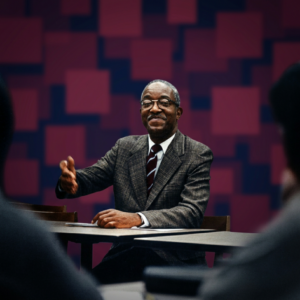 In 1947, he published From Slavery to Freedom, a groundbreaking work that would redefine the field. The book traced the African American experience from the transatlantic slave trade through emancipation and into the twentieth century, presenting a comprehensive and rigorously researched account that challenged prevailing assumptions. It was not simply a history of oppression, it was a history of resilience, agency, and contribution.
From Slavery to Freedom quickly became a foundational text, adopted in classrooms across the United States and beyond. For generations of students, it provided a more accurate and inclusive understanding of American history. The book’s impact cannot be overstated. It helped to legitimize African American history as a serious academic discipline and opened the door for future scholars to expand upon its themes. In many ways, Franklin did not just write a book, he changed the curriculum.
Franklin’s academic career took him to several prestigious institutions, including Howard University, the University of Chicago, and Duke University. At each stop, he continued to teach, write, and mentor students, helping to shape a new generation of historians. His scholarship extended beyond From Slavery to Freedom, encompassing works on Reconstruction, race relations, and Southern history. His writing was characterized by clarity, depth, and a commitment to truth, even when that truth was uncomfortable.
Yet Franklin was never content to remain solely within the confines of academia. He believed that history had a role to play in shaping public policy and advancing social justice. This belief led him to become actively involved in the civil rights movement. His expertise was sought by policymakers and leaders who recognized that understanding the past was essential to addressing the inequalities of the present.
Franklin served as an advisor to multiple U.S. presidents, including his role in helping shape discussions around civil rights and race relations. He was also part of the legal and intellectual groundwork that supported landmark decisions such as Brown v. Board of Education. His historical research helped demonstrate the long-standing inequalities embedded in American institutions, providing evidence that segregation was not only unjust, but deeply rooted in a distorted understanding of history.
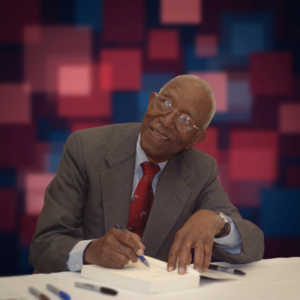 Throughout his life, Franklin navigated spaces that were often unwelcoming to African Americans, from elite universities to national policy circles. Yet he did so with a quiet determination and a steady commitment to excellence. He understood that his presence alone challenged assumptions, and that his work carried a responsibility not just to his discipline, but to his community.
One of the defining aspects of Franklin’s legacy is his ability to bridge worlds. He was equally at home in the classroom, the archive, and the halls of power. He could engage in scholarly debate one moment and contribute to national conversations on race and policy the next. This versatility made him a unique figure, a historian whose influence extended far beyond the written page.
Franklin’s contributions were widely recognized during his lifetime. He received numerous awards and honors, including the Presidential Medal of Freedom, the nation’s highest civilian award. Yet perhaps his greatest achievement lies not in the accolades he received, but in the lasting impact of his work. Today, African American history is an established and vital field of study, one that continues to grow and evolve. That reality owes much to the foundation Franklin helped build.
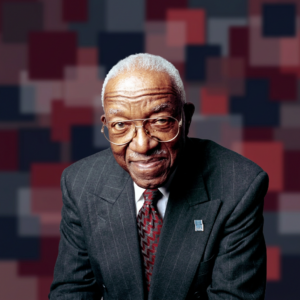 Even in his later years, Franklin remained engaged with the issues of his time. He continued to speak, write, and advocate for a more honest and inclusive understanding of American history. He was particularly vocal about the need to confront the legacy of slavery and segregation, emphasizing that progress required not only change in policy, but also a willingness to face uncomfortable truths.
When John Hope Franklin passed away in 2009, he left behind more than a body of work, he left behind a transformed discipline. The questions he asked, the narratives he challenged, and the standards he set continue to shape historical scholarship today.
And yet, at the heart of his story remains Rentiesville, Oklahoma. That small town, built on the principles of self-determination and community, provided the foundation for a man who would go on to influence the world. It is a reminder that even the most global impact can have deeply local roots.
John Hope Franklin did not simply study history, he changed how it is told. He took a story that had been incomplete and gave it depth, context, and truth. In doing so, he ensured that future generations would not only understand the past more clearly, but also recognize their place within it.
And if history is, as some say, the story a nation tells about itself, then Franklin made sure America finally started telling the truth.